Movers
Pro
An end-to-end logistics platform connecting load owners, truck operators and drivers across one operational system.
Explore the system↓
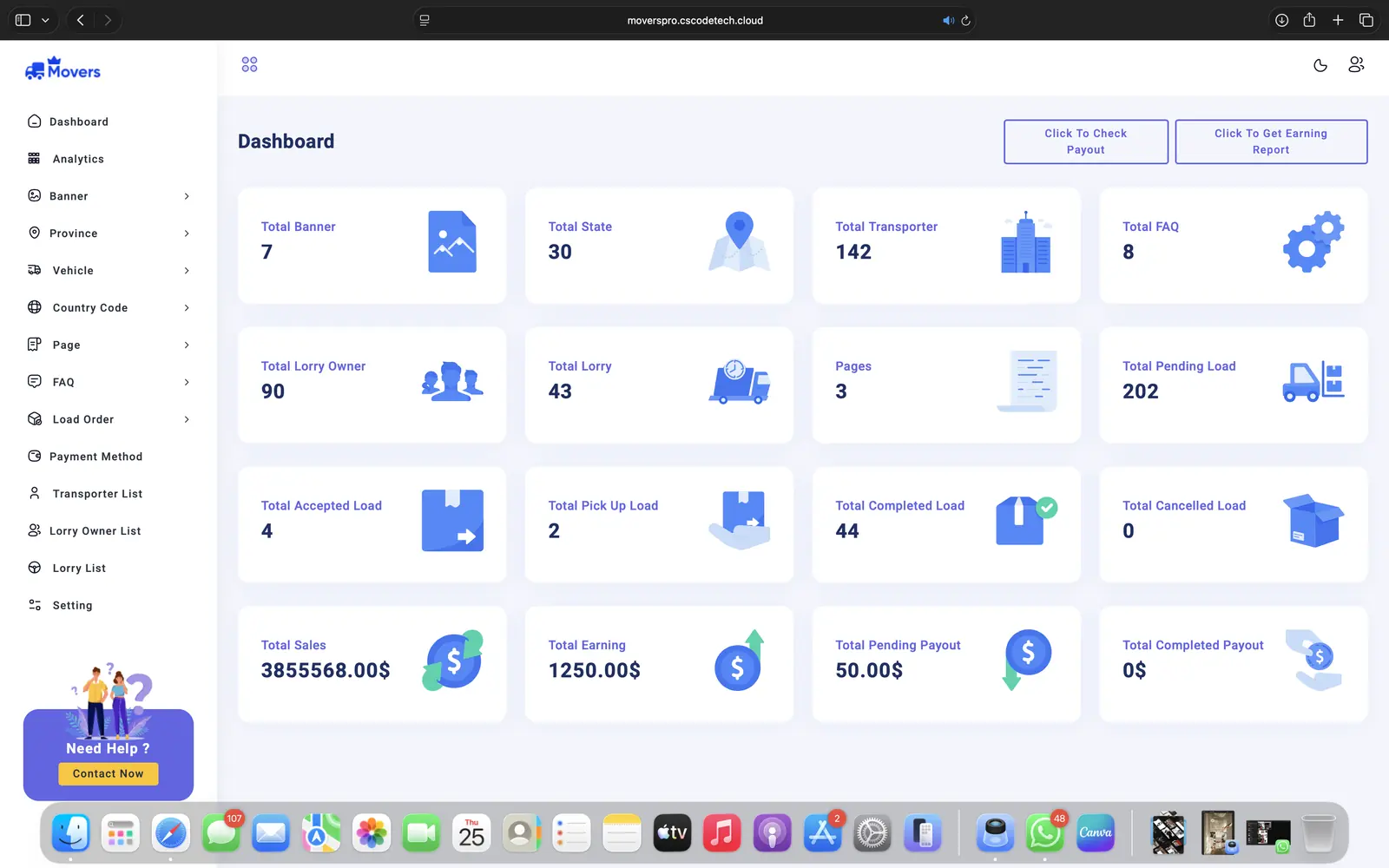

Built for logistics at operating scale.
MoversPro brings freight discovery, bidding, fleet control, live movement, financial settlement and operational intelligence into one connected platform.
Three users. One operation.
A shipment moves through different hands. MoversPro gives each role the controls it needs without breaking the shared operational picture.
Pro
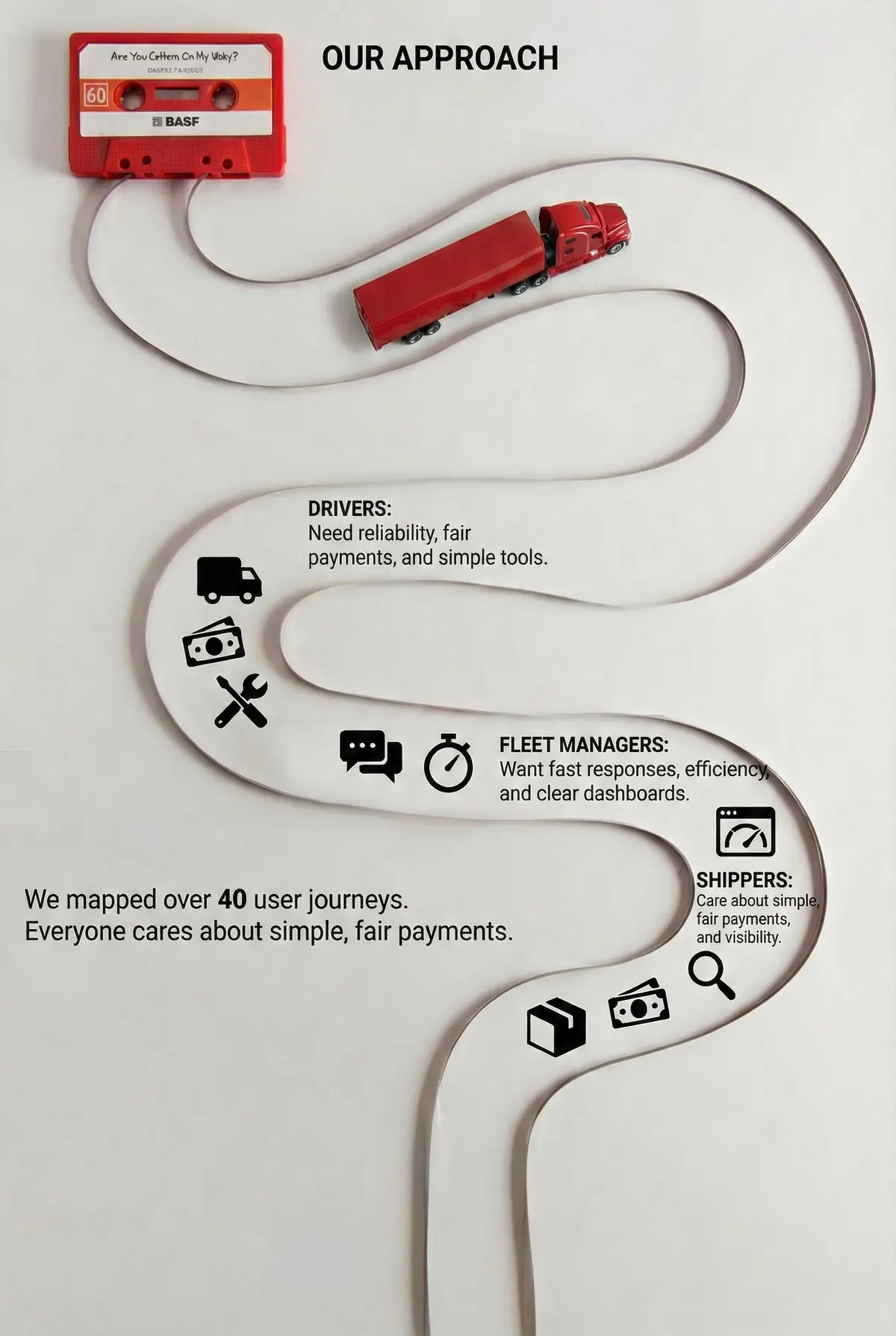
Understand the road before designing the system.
Time on the ground with drivers, dispatch teams, brokers and load owners exposed where real operations slow down.
User journeys across drivers, fleet managers and shippers revealed different priorities inside the same logistics chain.
Data consistency, resilience and scalability became the foundation for a system expected to work through poor connectivity and changing fleet sizes.
Architecture for a moving system.
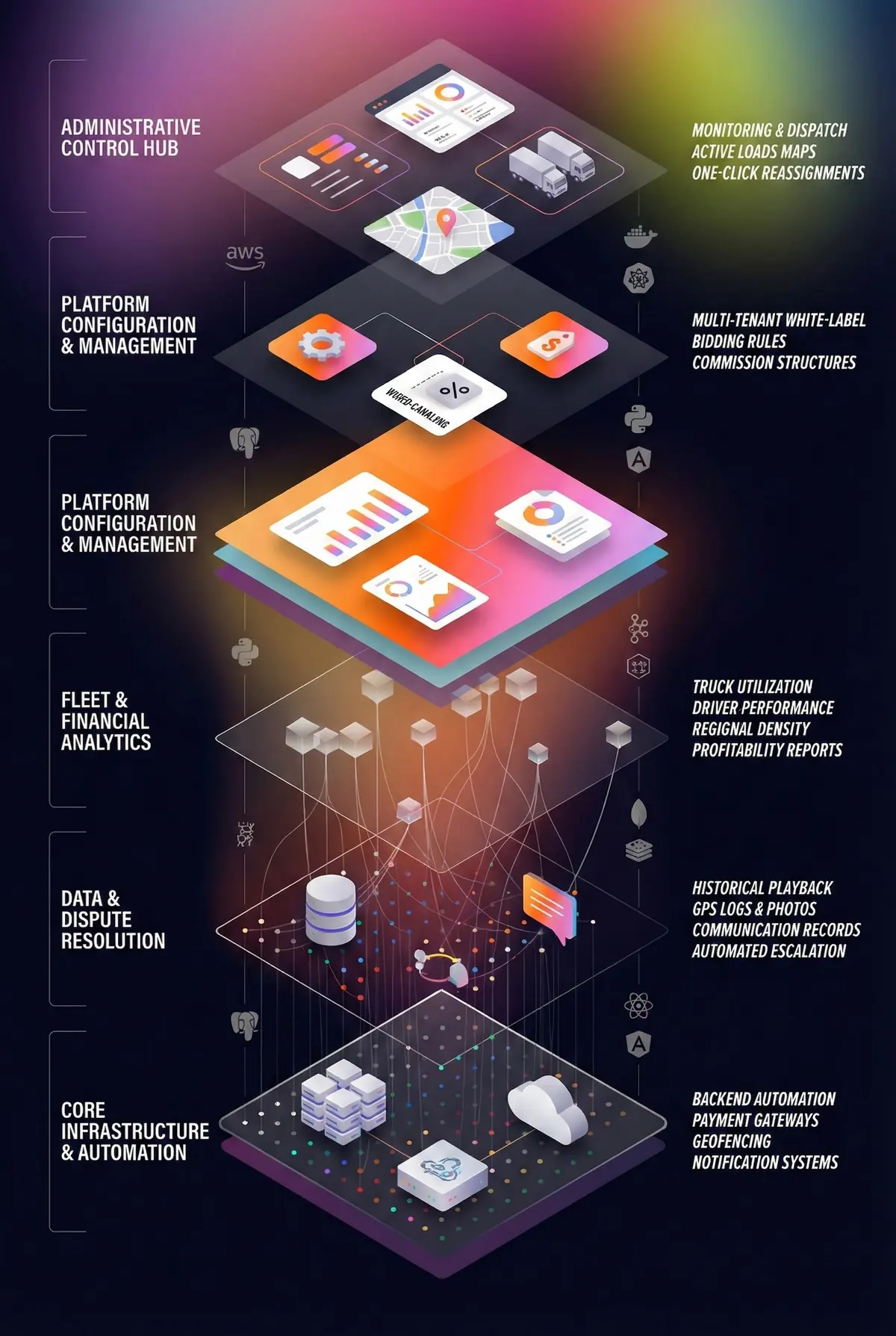
Each layer has a specific job: present the product clearly, coordinate logistics events, preserve transaction integrity and keep the platform available as load increases.
Mobile layer
Flutter delivers a unified application foundation across iOS and Android, with real-time updates, secure transactions and operational tools designed for use on the move.
Operations layer
Load posting, bidding, notifications, route events, driver state, payment workflows and administrative controls coordinate the shipment lifecycle.
Application layer
PHP 8.1 and an MVC architecture handle business logic, queue processing and API coordination for thousands of daily logistics events.
Data layer
MySQL stores load, driver, bid and payment data, while spatial and time-based indexing supports location tracking and scheduling.
Infrastructure layer
Load balancing, caching, replicas, deployment controls, backups and monitoring keep the platform resilient under operational pressure.
The operating control centre.
Real-time operations control
Monitor active loads, filter by region, vehicle type or urgency, and reassign work when the original route or resource plan changes.
Detailed load history
Trace load journeys, review route history and use operational records to understand where issues occurred.
Fleet analytics
Bring vehicle status, driver performance, utilization and regional operating information into one decision surface.
Financial reporting
Automate reconciliation views across commissions, fees and settlements, with drill-down access when financial activity needs review.
Platform configuration
Control bid duration, commission structures, geographic rules, notifications and other operational parameters without code changes.
Dispute governance
Review GPS logs, photos and communication records, then escalate complex issues through a clear administrative workflow.
Three apps. Three jobs.
Each application follows the same logistics network, but the interface is shaped around the decisions that role needs to make quickly.
Load Owner App
Quick load posting, address autocomplete, real-time matching, live tracking, ETA visibility and one-tap bid acceptance for urgent shipments.
From load posting to settlement.
MoversPro connects what are often separate logistics tools into one operational sequence with state shared across every participant.
Post the load
The load owner creates the shipment requirement with addresses, cargo context and timing information required by the network.
Engineered for failure conditions.
Logistics software does not operate in a clean lab. The QA program targeted the places where real journeys create uncertainty: load, location, connectivity, older devices and transaction integrity.

Functional integrity
Unit testing focused on critical systems including bidding logic, ETA calculations and payment reconciliation so operational decisions remain predictable.
Infrastructure that can keep moving.
Availability depends on more than application code. MoversPro uses redundancy, controlled deployment and monitoring to keep operational risk visible and recoverable.
Application delivery
Load-balanced application servers operate behind a reverse proxy and CDN caching layer, with auto-scaling available for traffic surges.
Database continuity
A MySQL primary-replica model distributes read pressure and supports automated failover when database availability is threatened.
Release control
Blue-green deployments allow new versions to be released without interrupting active operation and support immediate rollback.
Recovery
Daily backups, point-in-time recovery and off-site encrypted storage create multiple paths back from data or deployment failure.
Monitoring
More than 50 operational metrics cover bid activity, payment SLAs, application stability and other signals with automated incident alerts.
Built beyond the happy path.
The platform was tested under concurrency, field conditions and elevated transaction volume before those limits could become production surprises.
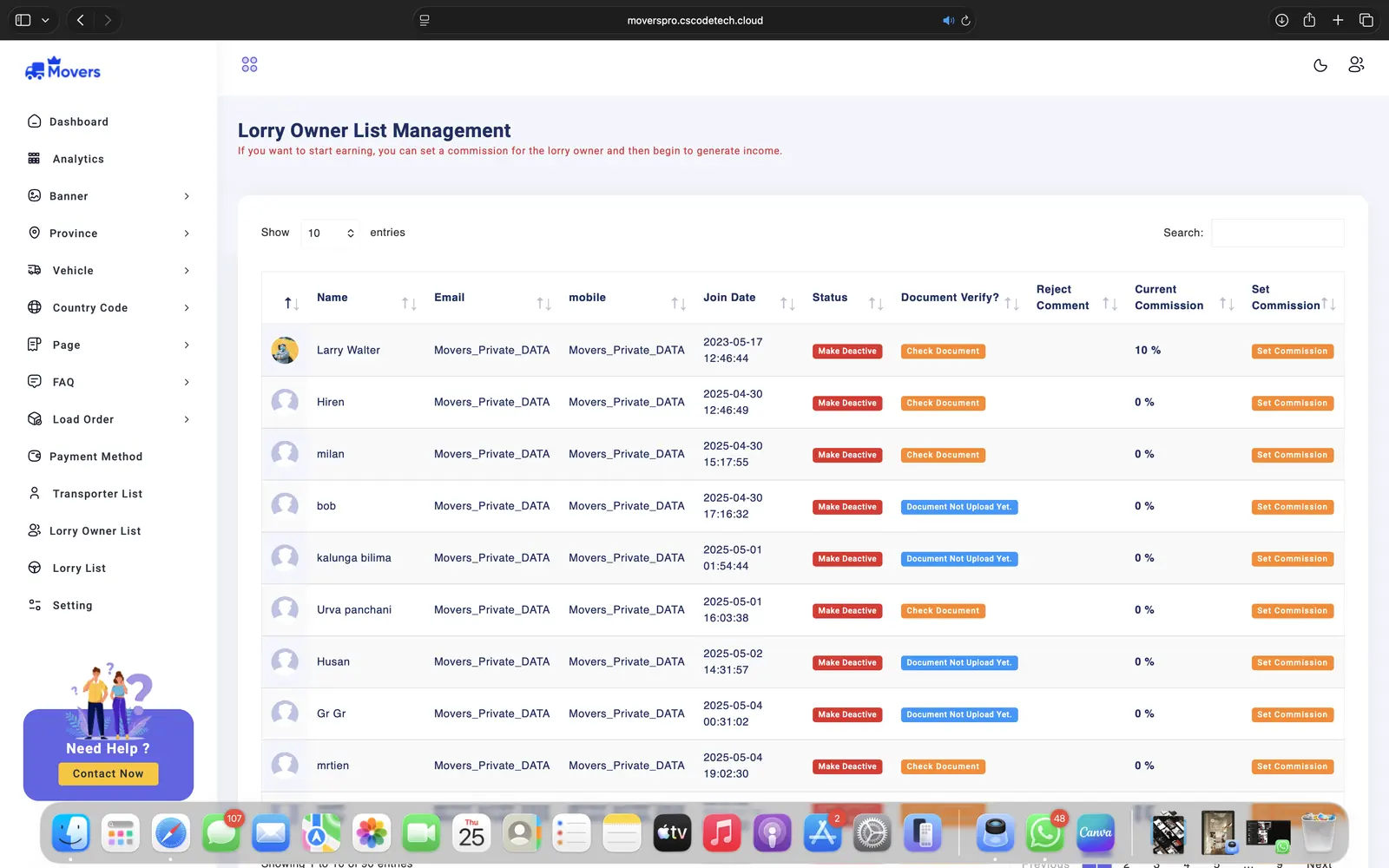
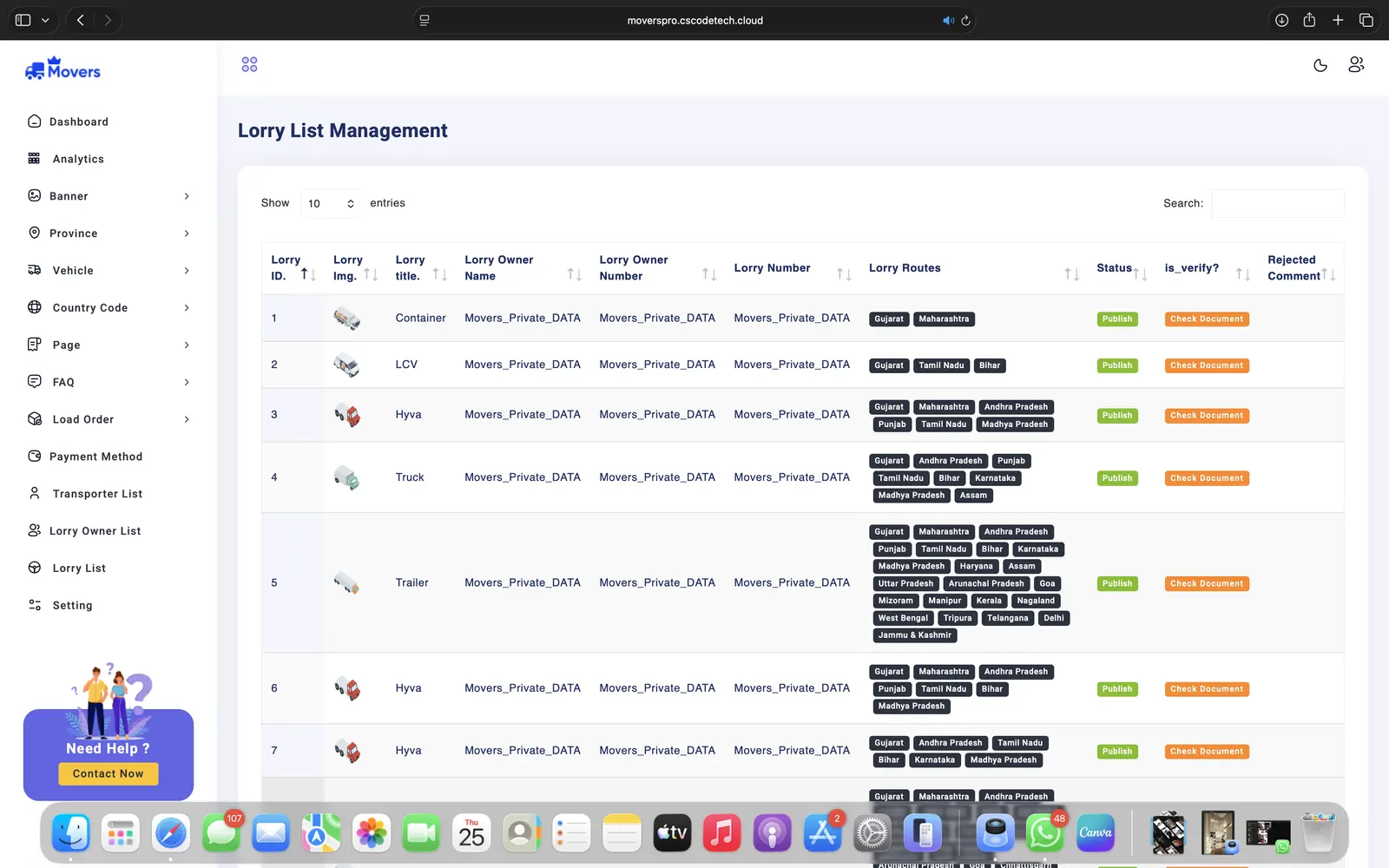
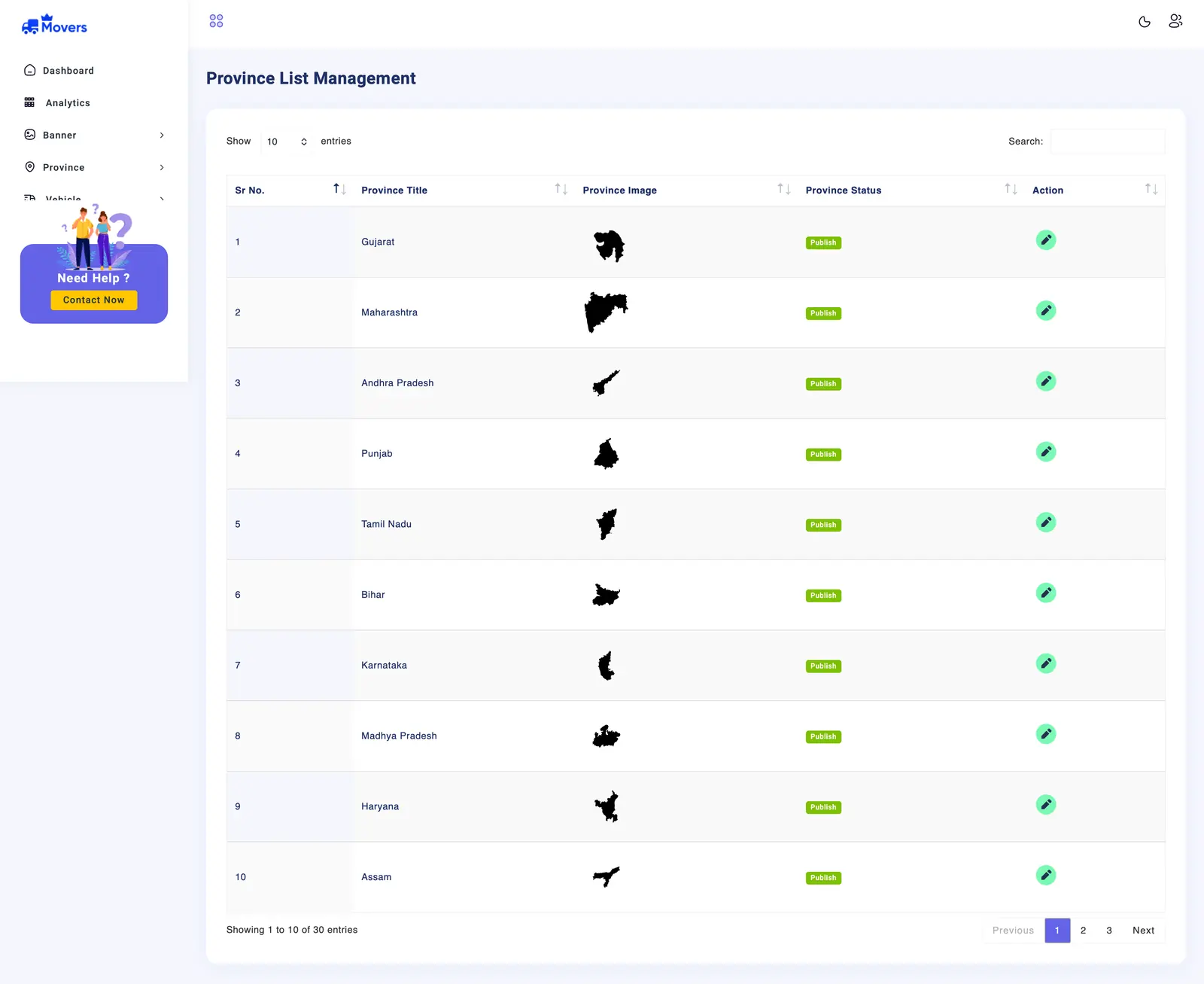
Proof lives in the interface.
The case study closes the distance between architecture and operation by showing the actual administrative and application surfaces used to run the system.
A cross-functional product build.
Core development ran for 16 months from discovery to launch, bringing together the disciplines required to design, engineer, validate and operate the platform.
Discovery
Field immersion, stakeholder interviews and workflow mapping established the real operational constraints.
Architecture
Product, data and infrastructure decisions translated the mapped journeys into a scalable technical foundation.
Core build
Backend services, administrative interfaces and three role-specific Flutter applications were developed as one connected system.
Integration
Tracking, bidding, payments, notifications and state synchronization connected the application surfaces.
Validation
Unit, integration, stress, GPS and user-acceptance testing pushed the product through technical and field edge cases.
Launch & iteration
Cloud deployment and weekly release cycles supported ongoing improvement without losing platform stability.
Software built around the operation.
MoversPro required product thinking across workflows, mobile environments, real-time data, financial processes, QA and infrastructure—not a collection of isolated screens.